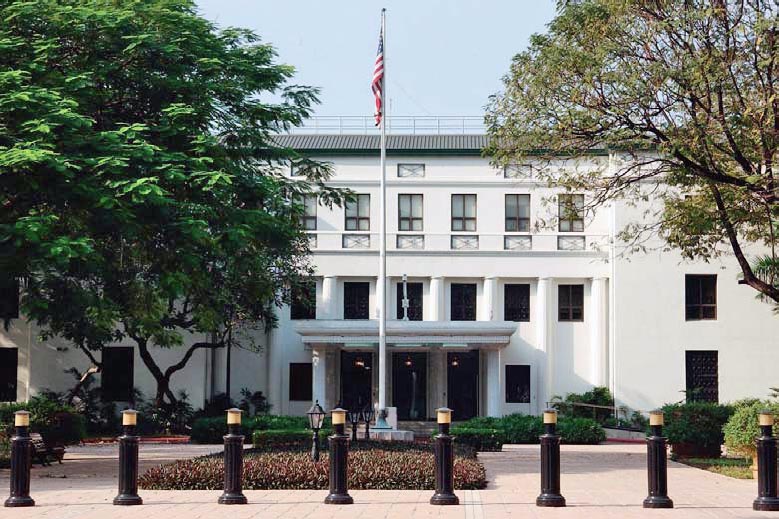
US-Philippine relations are based on strong historical and cultural links and a shared commitment to democracy and human rights. The US has designated the Philippines as a major non-NATO Ally, and there are close and abiding security ties between the two nations.
The Manila Declaration signed in 2011 reaffirmed the 1951 US-Philippines Mutual Defense Treaty as the foundation for a robust, balanced, and responsive security partnership. The US-Philippine Bilateral Strategic Dialogue advances discussion and cooperation on bilateral, regional, and global issues. There is also a focus on economic, commercial, and people-to-people ties. There are an estimated four million US citizens of Philippine ancestry in the United States, and more than 220,000 US citizens in the Philippines, including a large presence of US veterans.
An estimated 650,000 US citizens visit the Philippines each year. Many people-to-people programs exist between the United States and the Philippines, including Fulbright, the International Visitor Leadership Program, and the Kennedy-Lugar Youth Exchange and Study program.
The US government’s goal in the Philippines is to partner with the country to become a stable and prosperous nation. The 2011 Partnership for Growth Statement of Principles reinforced a shared interest in promoting inclusive and sustainable economic growth in the Philippines. US assistance to the Philippines fosters broad-based economic growth; improves the health and education of Filipinos; promotes peace and security; advances democratic values, good governance, and human rights; and strengthens regional and global partnerships.
Department of State, Department of Defense, and the US Agency for International Development (USAID) programs in conflict-affected areas of Mindanao aim to strengthen the foundation for peace and stability in the area. US assistance, including from the Millennium Challenge Corporation, seeks to intensify cooperation through a whole-of-government approach, using a wide range of assistance and other foreign policy tools. The United States has had a Peace Corps program in the Philippines for over 50 years.
The United States and the Philippines have a strong trade and investment relationship, with over $27 billion in goods and services traded (2016). The United States is one of the largest foreign investors in the Philippines and is the Philippines’ third-largest trading partner.
Embassy Info:
The Embassy’s main telephone number is (+63) 2 5301-2000.
US citizens needing emergency assistance may call the American Citizen Services Unit during normal operating hours of 7:30am-4:30pm. Outside of normal business hours, US citizens experiencing an emergency may call and request to be connected to the officer on duty.
Callers in the United States may also contact the US Department of State’s Office of Overseas Citizen Services toll free at 1-888-407-4747 (from overseas call 1-202-501-4444).
For more information on crises and emergency assistance overseas, please see the State Department website on Emergencies and Crises.
For emergencies in the Philippines, please alert local authorities at the numbers below:
- National Emergency Hotline in the Philippines: 911
- Philippine National Police Hotline: 117 or (02) 8722-0650
- Philippine Red Cross: 143 or (02) 8527-8385 to 95
- Bureau of Fire Protection: (02) 8426-0219 or (02) 8426-3812
U.S. EMBASSY IN MANILA, PHILIPPINES
Location & Information:
1201 Roxas Boulevard
Manila, Philippines 1000
Phone: (+63) 2 5301-2000
Visit our U.S. Embassy Manila page for more information.
- For case-specific visa-related inquiries, please review the updated information on the Visa page and fill out the website’s online inquiry forms.
- For concerns relating to human rights defenders, please read the Guidelines for U.S. Diplomatic Mission Support to Civil Society and Human Rights Defenders and send an email to ManilaHRDSupport@state.gov.
CONSULAR AGENCY IN CEBU
Location & Information:
Waterfront Hotel, Lower Ground Floor
Lahug, Cebu City, Philippines
Phone: (+63) 32 231-1261
Visit our U.S. Consular Agency in Cebu page for more information.
 ExPat Philly